


 |


| Quantity: | |||||||||
|---|---|---|---|---|---|---|---|---|---|
| Process 2000kg/h of PE/PP films, bags, and woven sacks with our automated recycling line. Features modular design, low water use, and energy-efficient drying. Explore industrial solutions. | |||||||||
PE
Chenxing
Product Description

The Waste PE/PP Plastic Film Recycling and Washing Line is a high-speed, fully automated system designed to transform agricultural films, PP woven bags, and dirty plastic packaging into clean, dry flakes for reuse. With processing capacities from 300kg/h to 2000kg/h, this line integrates crushing, floating washing, friction scrubbing, dewatering, and drying to remove contaminants and moisture efficiently. Featuring a modular "L" or "U" shape design, it adapts to any workshop layout while minimizing water and energy consumption. Ideal for B2B clients in recycling and manufacturing, this eco-friendly solution ensures high-quality output with low operational costs, making it perfect for large-scale film scrap processing.


| Item | Technical data | |||||
| GHX-150 | GHX-200 | GHX-300 | GHX-500 | GHX-600 | GHX-800 | |
| Volume (L) | 150 | 200 | 300 | 500 | 600 | 800 |
| Effective volume (L) | 100 | 150 | 225 | 375 | 450 | 600 |
| Main shaft speed(r/min) | 1050 | 1000 | 950 | 750 | 750 | 750 |
| Output (kg/h) | 100 | 150 | 200 | 300 | 400 | 550 |
| Motor (kw) | 37 | 45 | 55 (75) | 90 | 110 | 110 (132) |
| Weight (kg) | 1000 | 1200 | 1800 | 2500 | 2700 | 3000 |
| Dimension (m) | 1.7*0.75*1.5 | 1.7*0.85*1.5 | 2*0.85*1.6 | 2.3*0.95*1.7 | 2.3*1.1*1.75 | 2.5*1.25*1.8 |
| Rotate blade quantity | 2 | 2 | 2 | 4 | 4 | 4 |
| Fixed blade quantity | 6 | 6 | 8 | 8 | 8 | 8 |
| Pot material | Stainless steel | |||||
| Blade material | 9CrSi | |||||
| Discharge method | Automatic / Manual | |||||
Remarks: all information above is only for refererence; please gather the exact data by contacting us.

1.Plastic Crusher Machine

2.Friction washer

3.Washing Tank

4.Silo
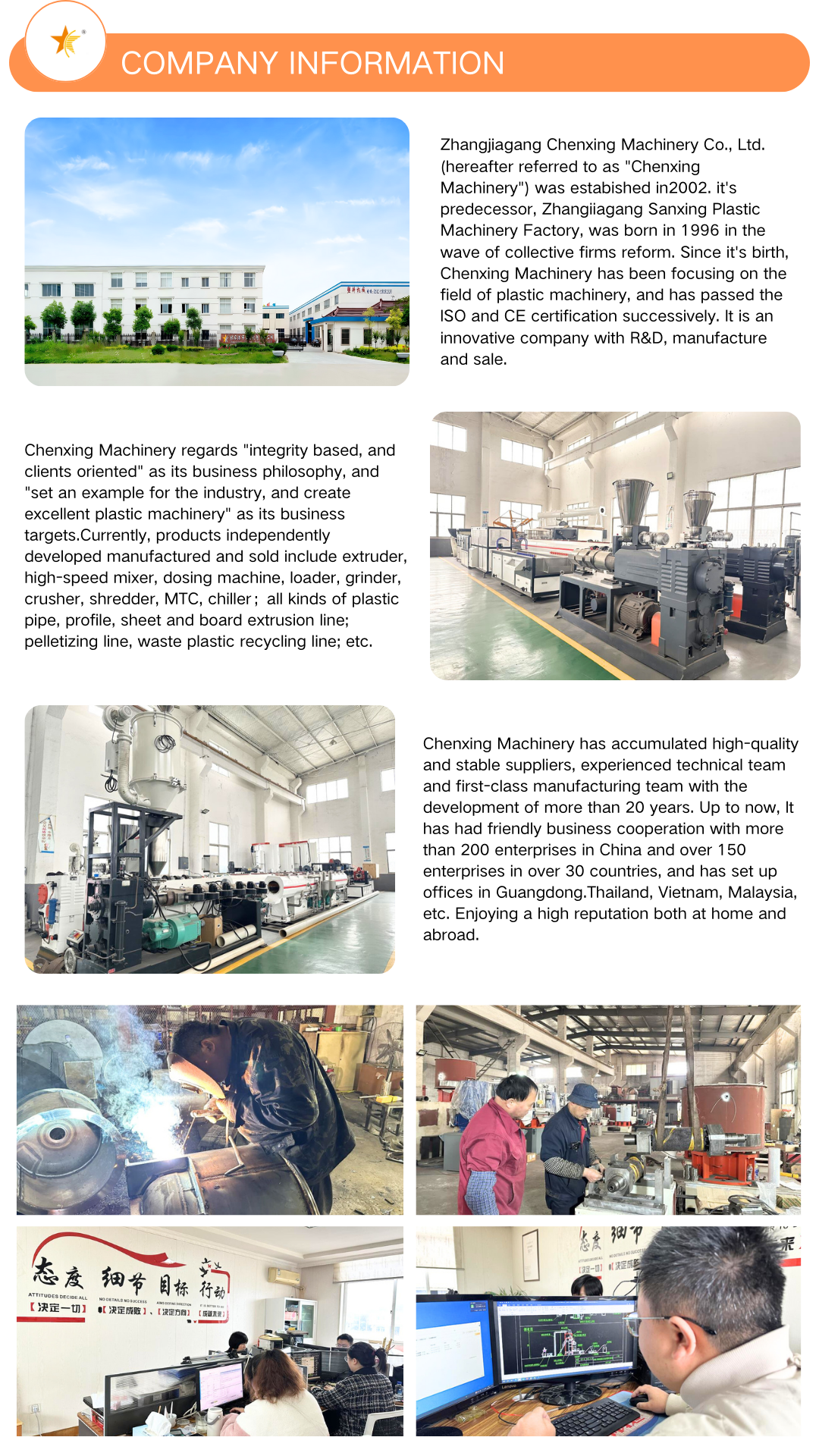
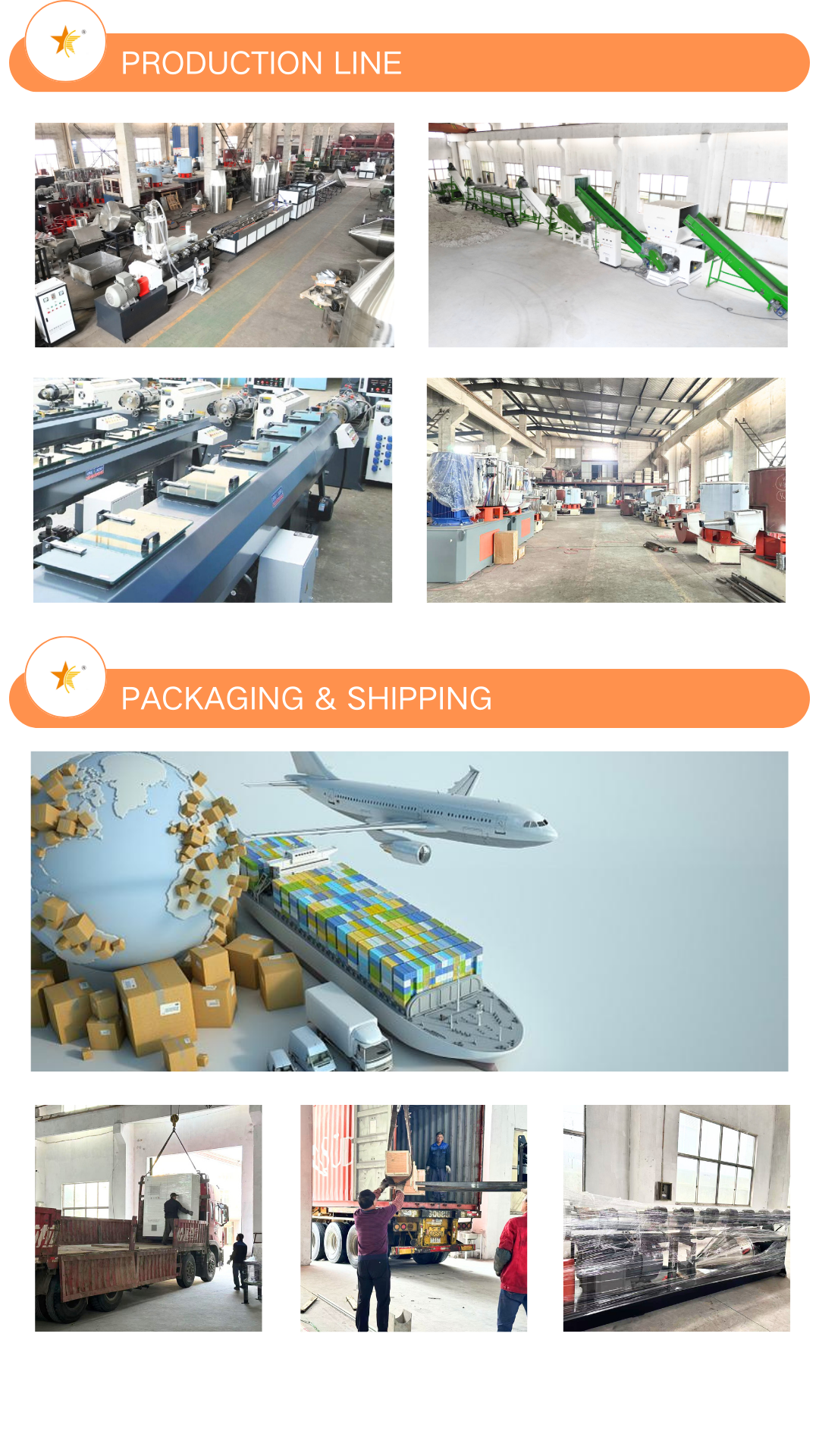
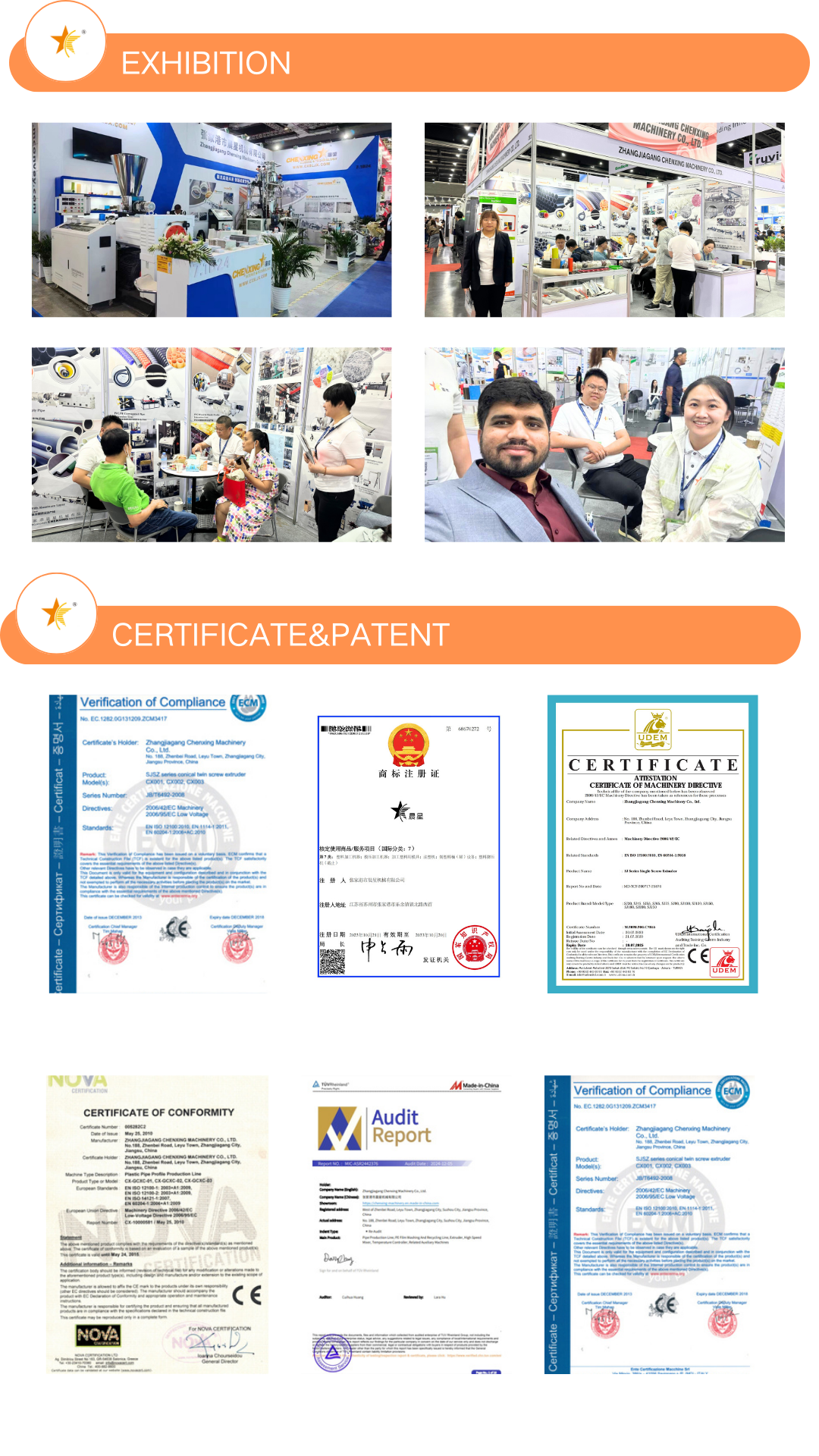
A PE PP film recycling line is a system designed to process and recycle plastic films made from Polyethylene (PE) and Polypropylene (PP), commonly used in packaging, agricultural films, and various other applications. The recycling process involves collecting waste films, cleaning, shredding, and reprocessing them into reusable plastic pellets or flakes, which can be used in the manufacturing of new products. This process helps reduce plastic waste and contributes to a circular economy.
A PE PP film recycling line can handle various types of plastic films, including:
Polyethylene (PE) films: Used in grocery bags, shrink wraps, agricultural films, and food packaging.
Polypropylene (PP) films: Used in food packaging, label films, and non-woven fabrics.
Multilayer films: Some PE PP lines can process films that are made from a combination of materials, such as PE with aluminum or other laminates, though these require more advanced technology.
Post-consumer plastic films: Films collected from consumer waste such as shopping bags, stretch wraps, and agricultural films.
A typical PE PP film recycling line consists of the following components:
Feeding system: A system to load the plastic films into the line, which can include a conveyor or pre-shredding unit.
Shredder or crusher: A machine that reduces the size of the plastic films into smaller pieces, making them easier to process.
Washing system: This includes water tanks, detergents, and mechanical agitation to clean contaminants such as dirt, oil, and food residues from the films.
Drying system: After washing, the films are dried using air knives, centrifuges, or a thermal dryer to remove excess water.
Extruder: The extruder melts the cleaned and dried plastic and forces it through a die to form plastic pellets or flakes.
Pelletizing system: A system that cools the molten plastic and cuts it into uniform-sized pellets or granules.
Screening and filtration: To remove impurities and maintain the quality of the final product.
Control panel: For monitoring and controlling the entire recycling process, ensuring optimal operation and product quality.
The key benefits of a PE PP film recycling line include:
Waste reduction: It helps in reducing plastic film waste by recycling it into valuable raw materials for new products.
Cost savings: Recycling plastic films can lower the cost of raw materials by turning waste into usable plastic pellets.
Environmental benefits: Reduces the amount of plastic waste ending up in landfills and oceans, helping to mitigate environmental pollution.
High-quality recycled materials: Advanced recycling technology can produce high-quality recycled pellets that are suitable for a variety of applications.
Energy efficiency: Modern recycling lines are designed to be energy-efficient, reducing the energy consumption in the recycling process.
The PE PP film recycling process typically follows these stages:
Collection and sorting: Waste PE and PP films are collected and sorted to remove contaminants, such as metals, paper, and other plastics.
Shredding: The films are fed into a shredder or crusher to reduce their size into smaller pieces (flakes).
Washing: The shredded plastic flakes are washed using water, detergent, and mechanical agitation to remove dirt, oils, labels, and other impurities.
Drying: After washing, the film flakes are dried using air knives or centrifugal dryers to eliminate any residual moisture.
Extrusion: The cleaned and dried flakes are fed into an extruder, which melts the plastic and forces it through a die to create new plastic pellets.
Pelletizing: The molten plastic is cooled and cut into uniform pellets, which can be used as raw material for manufacturing new plastic products.
Quality control and packaging: The final product is tested for quality, and the pellets are packaged for distribution to manufacturers.
A PE PP film recycling line can handle a variety of waste materials, such as:
Agricultural films: Used in farming, such as greenhouse films, mulch films, and silage films.
Packaging films: Includes single-use plastic packaging like shopping bags, stretch film, and food wrappers.
Post-consumer films: Films collected from consumer waste, such as used plastic bags and wraps.
Industrial waste: Waste films generated by industries, including those used for pallet wrapping or factory packaging.
The production capacity of a PE PP film recycling line varies depending on the specific configuration and size of the line, but typical capacities are:
200-500 kg/h for smaller, less automated systems.
500-1000 kg/h for medium-capacity systems.
1000-2000 kg/h or more for high-capacity lines. The capacity is influenced by factors such as the type of film being processed, the level of contamination, and the efficiency of the washing and drying systems.
Challenges in recycling PE PP films include:
Contamination: Plastic films are often contaminated with food, dirt, adhesives, and other materials that must be removed through washing and cleaning, which can be time-consuming and costly.
Film quality: Films with low thickness or high elasticity can be difficult to process efficiently, especially when they become tangled during feeding or shredding.
Multilayer films: Films made from multiple layers of different materials (such as PE/PP with aluminum or paper) are harder to separate and process.
Energy consumption: The extrusion process and washing system can be energy-intensive, particularly when handling large quantities of waste films.
Market demand for recycled materials: There can be fluctuations in the market demand for recycled plastic pellets, affecting the profitability of the recycling process.
Common contaminants in PE PP films include:
Dirt and sand: These are removed through mechanical washing in water tanks or with air knives.
Food residues: These are cleaned off using detergent-based washing systems and hot water.
Adhesives and labels: Special washing solutions or chemical treatments are used to remove sticky residues from labels and adhesives.
Metals and foreign particles: Magnetic separators or metal detectors can be used to remove metals or other foreign contaminants.
To ensure high-quality recycled pellets, the following factors are controlled:
Washing efficiency: Proper washing systems are used to thoroughly clean contaminants from the films.
Extrusion settings: Temperature, pressure, and screw speed in the extruder must be carefully controlled to ensure uniform melting and pelletizing of the plastic.
Screening and filtration: Screen changers and filters are used during extrusion to remove impurities and prevent defects in the pellets.
Testing and quality control: Samples of the recycled pellets are regularly tested for physical properties, such as density, melt flow index (MFI), and strength, to ensure they meet industry standards.
The end product of a PE PP film recycling line is typically recycled plastic pellets that can be used as raw material in manufacturing new products. These pellets can be used to make:
Plastic bags and films.
Injection-molded products: Such as containers, pallets, and other consumer goods.
Construction materials: Recycled PP/PE can be used in the production of plastic pipes, decking, and flooring materials.
Automotive parts: Recycled materials can be used for non-critical automotive components.
Agricultural products: Such as irrigation systems or biodegradable plastic films.
Regular maintenance is essential to ensure the smooth operation of a PE PP film recycling line. Key maintenance tasks include:
Cleaning and replacing screens: Regularly clean or replace screens in the washing system and extruder to prevent clogging and maintain optimal flow.
Lubrication: Regular lubrication of moving parts like the shredder, extruder, and pelletizer to reduce wear and tear.
Monitoring extruder temperatures: Ensure that the extruder and associated heating systems are maintained at optimal temperatures to prevent overheating or under-heating of the plastic.
Inspection of cutting blades: The cutting blades used in the pelletizer need to be inspected and sharpened periodically for efficient cutting.
System calibration: Ensure that the calibration system for pellet size is working correctly to produce uniform-sized pellets.
Checking for leaks: Inspect hoses, seals, and connections for leaks, especially in the washing and drying sections, to prevent water damage and material loss.
To select the appropriate recycling line, consider the following:
Material type and volume: Determine the type of films you will be processing and the volume of material you expect to recycle daily.
End product quality: Consider the quality of recycled pellets required for your application and whether you need high-purity recycled material.
Automation and ease of operation: Evaluate the level of automation and control provided by the system, as well as ease of operation and maintenance.
Energy efficiency: Choose a line with energy-saving features to minimize operating costs.
Space and scalability: Consider the space requirements of the recycling line and whether it can be scaled up as your recycling capacity increases.
Product Parameters
200-300Kg/h | 300-400Kg/hr | 400-500Kg/hr | 600-800Kg/h | |
Model and name | Power(KW) | Power(KW) | Power(KW) | Power(KW) |
Belt conveyer | 1.1 | 1.1 | 1.5 | 1.5 |
Crusher | 22 | 37 | 55 | 75 |
Spiral conveyer | 1.5 | 2.2 | 3 | 3 |
High speed friction washing | 11+0.75 | 15+0.75 | 15+0.75 | 18.5+0.75 |
Washing conveyer | 7.5 | 11 | 11 | 15 |
Floating washer | 1.5+1.1+1.5 | 1.5+1.1+1.5 | 3+1.1+1.5 | 3+2.2+1.5 |
Spray washer | 1.5+1.5 | 2.2+2.2 | 3+3 | 3+3 |
Washing conveyer | 11 | 11 | 15 | 15 |
dewatering | 30 | 37 | 37 | 75 |
Cyclone storehouse | ||||
Length of line | 24m | 26m | 26m | 35m |
| Machine List | Function |
| Belt conveyor | Convey waste plastic into crusher |
| Crusher | With water,will cut waste plastic into small pieces |
| Screw feeder | Convey small pieces |
| High speed friction washer | Scrubbing material in high speed with water |
| Floating separator washer | Separate PP PE and PET,dirty according to specific density |
| Dewatering machine | High speed centrifuge drying |
| Pipeline dryer | Electric heating wind drying |
| Storage silo | Store the final material |
Detailed Photos
FAQ
About Us


