


News&Blogs
The EU Green Deal and dual carbon goals are reshaping chemical management. Discover how AI-powered eco-friendly dosing solutions with low-energy pumps, carbon tracking, and waste minimization are redefining sustainable manufacturing.

Two of the most powerful forces reshaping global manufacturing — artificial intelligence and environmental sustainability — have converged on an unexpected battleground: the industrial dosing system. The collision of these mega-trends is producing a new generation of eco-friendly dosing solutions that simultaneously reduce environmental impact and improve operational economics.
The EU Green Deal's embodied-carbon-tracking requirements are fundamentally reshaping equipment specifications. Major manufacturers — including industry bellwethers like Mettler-Toledo — are launching low-energy pumps aligned with federal green mandates. For plastic manufacturers worldwide, the message is clear: dosing technology must now deliver on both precision and sustainability KPIs.
Traditional industrial pumps consume significant energy — a cost that shows up in both electricity bills and carbon accounting ledgers. The new generation of low-energy dosing pumps addresses this through smarter motor design, optimized flow paths, and intelligent duty cycling. When integrated into a fully automated compounding system, these efficiency gains compound across the entire production line.
For PVC pipe extrusion and WPC manufacturing operations running 24/7, the cumulative energy savings from efficient dosing pumps can represent a material reduction in both operating costs and carbon footprint.
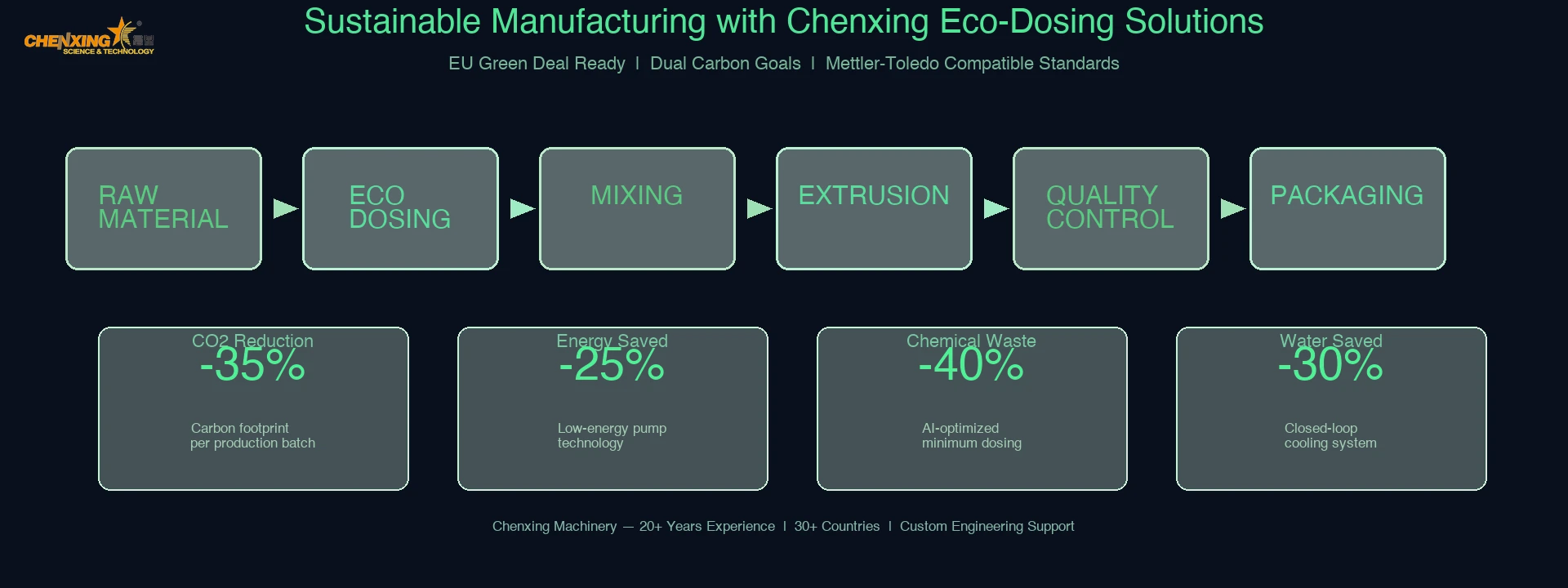
AI's contribution to sustainability extends beyond energy efficiency into the core of chemical management. Smarter algorithms optimize raw material usage by continuously calculating the minimum effective dose for each production scenario — eliminating the "safety factor over-dosing" that has been standard practice for decades.
The Chenxing Liquid Automatic Metering & Conveying System embodies this principle through:
Temperature-Compensated Density Correction: Eliminating over-dosing caused by density variations
Formula Management: Storing optimized recipes that minimize chemical consumption without sacrificing quality
Batch-Level Traceability: Identifying consumption patterns that reveal waste reduction opportunities
Real-Time Flow Correction: Preventing both under-dosing (quality risk) and over-dosing (waste and cost)
The EU Green Deal is not merely a policy document — it is an enforceable regulatory framework that is reshaping global equipment specifications. Embodied carbon tracking requirements mean that manufacturers must now account for the carbon footprint of their production processes, including chemical consumption, energy usage, and material waste.
For industrial manufacturers exporting to European markets, this creates a direct compliance requirement. Automated dosing systems that provide digital records of chemical consumption, energy usage, and waste generation become essential tools for carbon accounting and regulatory reporting.
China's dual carbon goals — peaking carbon emissions before 2030 and achieving carbon neutrality before 2060 — are driving similar transformation across Asian manufacturing. For Chenxing Machinery, headquartered in Zhangjiagang, Jiangsu Province, this regulatory environment directly shapes product development priorities.
The company's automatic compounding and liquid metering systems are designed with sustainability as a core engineering parameter — not an afterthought. Features including optimized energy consumption, minimal chemical waste, and complete consumption traceability align with both EU Green Deal requirements and Asian dual carbon targets
In an era of rising raw material costs and tightening environmental regulation, material waste management has evolved from a cost-center concern to a strategic competitive advantage. Manufacturers that minimize chemical waste through precision dosing capture three simultaneous benefits: lower input costs, reduced disposal expenses, and stronger sustainability credentials that resonate with environmentally conscious buyers.
For plastic recycling operations, this advantage is particularly acute. Recycling processes that require additive dosing for melt modification, processing enhancement, odor control, and stabilization benefit directly from the waste-minimizing precision of automated metering.
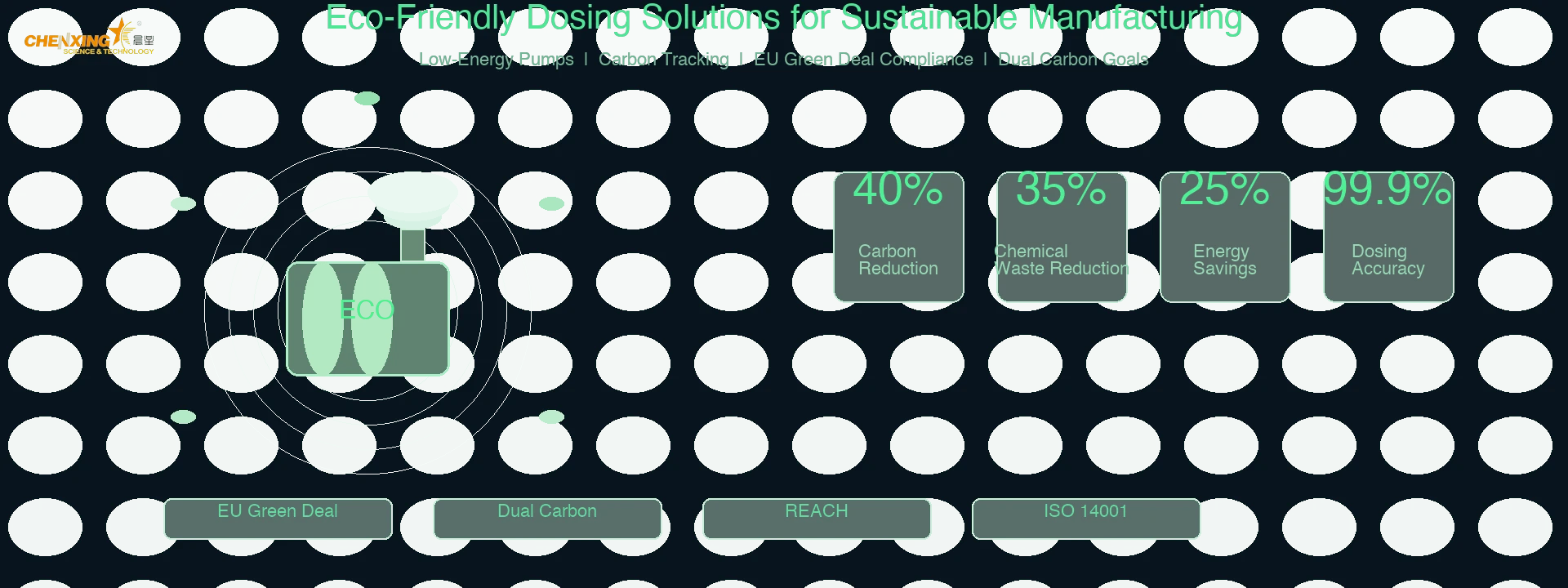
Low-energy pumps combine efficient motor design, optimized flow paths, and intelligent duty cycling to minimize electricity consumption. When integrated across a full production line, these savings accumulate significantly — reducing both energy costs and carbon accounting metrics.
Embodied carbon tracking accounts for all greenhouse gas emissions associated with a product's manufacturing process — including chemical consumption, energy use, and material waste. The EU Green Deal mandates this tracking, making automated dosing systems with digital record-keeping essential for regulatory compliance in European markets.
AI algorithms analyze production data to calculate the minimum effective dose for each scenario, eliminating the traditional "safety factor over-dosing" approach. Combined with temperature-compensated metering, this reduces chemical consumption without compromising product quality.
Yes. Chenxing Machinery's dosing solutions support green manufacturing through precision chemical control that minimizes waste, energy-efficient pump design, complete consumption traceability for carbon accounting, and formula optimization that reduces raw material usage — aligning with both EU Green Deal and Asian dual carbon requirements.
Absolutely. Precision dosing reduces production costs through three mechanisms: lower raw material consumption (no over-dosing), reduced energy usage (efficient pumps and optimized cycles), and minimized waste disposal expenses. These operational savings typically deliver rapid ROI on dosing equipment investment.
The convergence of AI intelligence and sustainability mandates is not a future scenario — it is today's manufacturing reality. Chenxing Machinery delivers eco-friendly dosing solutions that reduce chemical waste, lower energy consumption, and provide the carbon-tracking data that global regulations demand. With 20+ years of experience and support for 30+ countries, we help manufacturers turn sustainability from a compliance burden into a genuine competitive advantage.
Request Your Sustainable Dosing Solution →


