


News&Blogs
As plastic film waste continues to grow globally, manufacturers and recycling plants face a common challenge: how to efficiently process soft, lightweight, and irregular plastic scraps such as PE film, PP woven bags, raffia, fibers, and thin sheets.
A plastic agglomerator machine, also known as a plastic densifier or granulating compactor, has become a core solution for handling these materials. By combining high-speed cutting, friction heating, and rapid cooling, agglomerators convert loose plastic waste into dense, uniform granules suitable for extrusion and pelletizing.
At Chenxing Machinery, plastic agglomerators are widely integrated into extrusion and recycling lines to improve feeding stability, material utilization, and production efficiency.
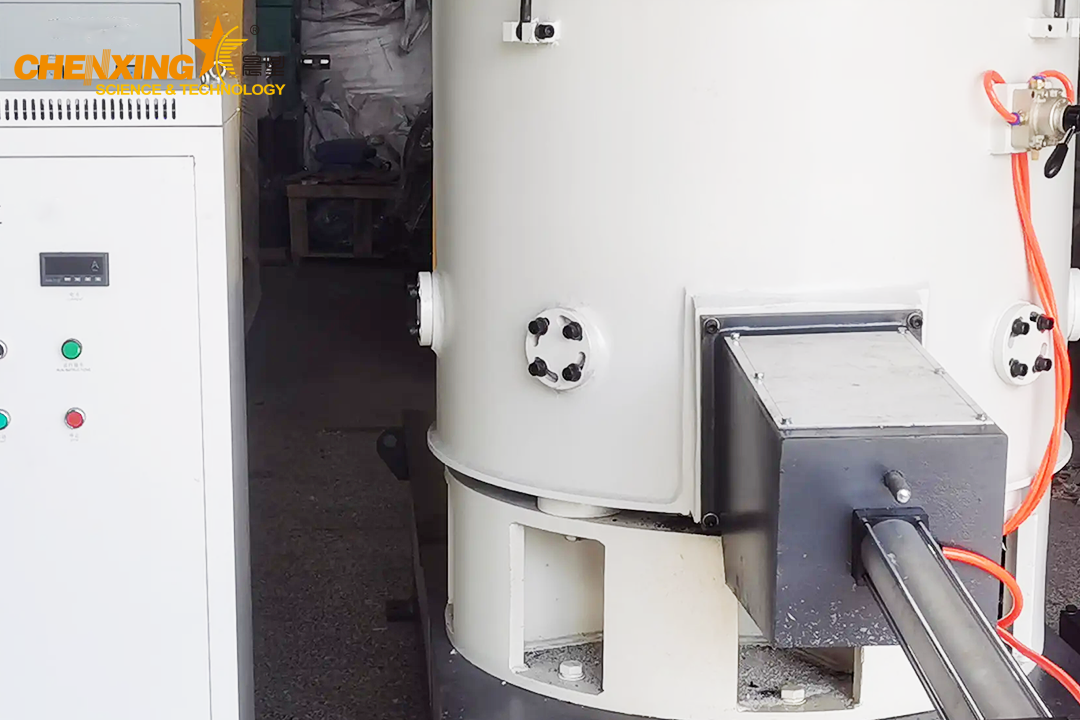
A plastic agglomerator is a recycling machine designed to process soft plastic waste into compact granules through a thermo-mechanical process. It is commonly used for:
PE film
PP woven bags
LDPE and HDPE films
Plastic fibers and raffia
Sheet scraps and thin plastic offcuts
Unlike traditional shredders, an agglomerator performs cutting, heating, melting, and granulation in one chamber, producing semi-melted pellets that can be directly fed into extruders or pelletizing systems.
This makes the agglomerator an ideal pre-processing machine in:
Plastic recycling lines
Extrusion feeding systems
Masterbatch production
Film reprocessing plants
Plastic agglomerators are widely used to recycle:
Agricultural film waste
Packaging film
Shopping bags
Stretch film and industrial wrapping film
By densifying low-bulk-density materials, the machine significantly improves conveying and extrusion feeding efficiency.
Agglomerators are also suitable for chemical fiber waste such as:
Nylon fibers
Polyester fibers
Industrial raffia yarn waste
These materials can be crushed, compacted, and re-granulated for reuse.
In extrusion plants, agglomerators are often used as:
Pre-feeding systems
Mixing and drying alternatives
Material homogenization units
They help stabilize extrusion output and reduce raw material loss.
The agglomerator uses a high-speed rotating shaft equipped with moving blades working together with fixed knives mounted on the machine chamber.
The process includes:
High-speed cutting – Plastic waste is rapidly shredded into small fragments.
Friction heating – Continuous blade rotation generates heat through material friction.
Plastic softening – The plastic reaches a semi-molten state.
Water injection cooling – Measured water is sprayed to stop melting and prevent clumping.
Granule formation – Material contracts into dense, irregular granules ready for reuse.
This closed-loop thermal and mechanical interaction ensures stable granulation without external heating systems.
During operation, temperature rises naturally due to friction. Controlled water cooling prevents:
Material degradation
Overheating
Carbonization
Pellet deformation
This helps maintain consistent granule quality for downstream extrusion or injection molding.
By adjusting blade clearance and processing parameters, operators can control:
Granule size
Density
Output consistency
This flexibility allows the agglomerator to adapt to different plastic materials and production requirements.
Plastic agglomerator machines from Chenxing Machinery are suitable for:
Polyethylene (PE)
Polypropylene (PP)
PVC film scraps
EVA waste
PS soft plastics
Engineering plastic fibers
They perform especially well with:
Medium-hard plastics
Flexible films
High-impact soft materials
Agglomerators combine multiple processes into one system, reducing:
Processing time
Equipment footprint
Material handling steps
This improves plant productivity and material flow efficiency.
Compared with traditional heating granulators, friction-based agglomeration consumes less energy while maintaining high throughput.
The machine features:
Simple structure
Easy blade replacement
Convenient cleaning access
Stable mechanical transmission
This reduces downtime and maintenance cost.
High-quality alloy steel blades offer:
Long service life
High wear resistance
Regrinding capability
This ensures consistent performance over extended operating periods.
Chenxing plastic agglomerators are commonly integrated with:
Plastic extrusion lines
Pelletizing systems
Film recycling washing lines
Automatic feeding systems
This allows customers to build:
Fully automated recycling plants
Closed-loop material reuse systems
High-efficiency extrusion production lines
Agglomerators reduce film fluffiness and improve feeding stability for pelletizing extruders.
Used as pre-mixing and feeding equipment to ensure uniform melt flow.
Agglomerated materials improve pigment dispersion and blending quality.
Agglomerators prepare pre-processed feedstock for further pulverizing.
Yes. The output granules are designed for direct feeding into extrusion and pelletizing machines.
In many recycling applications, the agglomerator can partially replace traditional mixers and drying equipment by combining heating, mixing, and densification.
Capacity depends on model selection and material type. Chenxing offers scalable solutions from small workshop systems to industrial production lines.
Regular blade inspection, lubrication, and cooling system checks ensure long-term stable operation.
Yes, but material compatibility and contamination levels should be evaluated during project design.
With over 20 years of experience in plastic extrusion and recycling equipment manufacturing, Chenxing Machinery provides:
Customized machine configurations
Reliable industrial-grade components
Engineering installation guidance
Global after-sales technical support
We help customers build stable, efficient, and scalable plastic recycling and extrusion systems.
Looking to improve your plastic recycling or extrusion feeding efficiency?
Explore Chenxing Plastic Agglomerator Machines at:
https://www.chenxingmachinery.com
Contact our engineering team today to receive a customized processing solution for your plastic waste materials.


