


News&Blogs


In plastic pipe extrusion, dimensional accuracy and surface stability are not achieved by the extruder alone. One of the most decisive pieces of downstream equipment is the vacuum calibration tank. For manufacturers producing PVC, PE, PPR, or HDPE pipes, understanding how a vacuum calibration tank works—and how to select the right one—directly affects product quality, scrap rate, and long-term operating cost.
This article explains what a vacuum calibration tank is, how it functions in real production environments, and why it remains a core component in modern pipe extrusion lines.
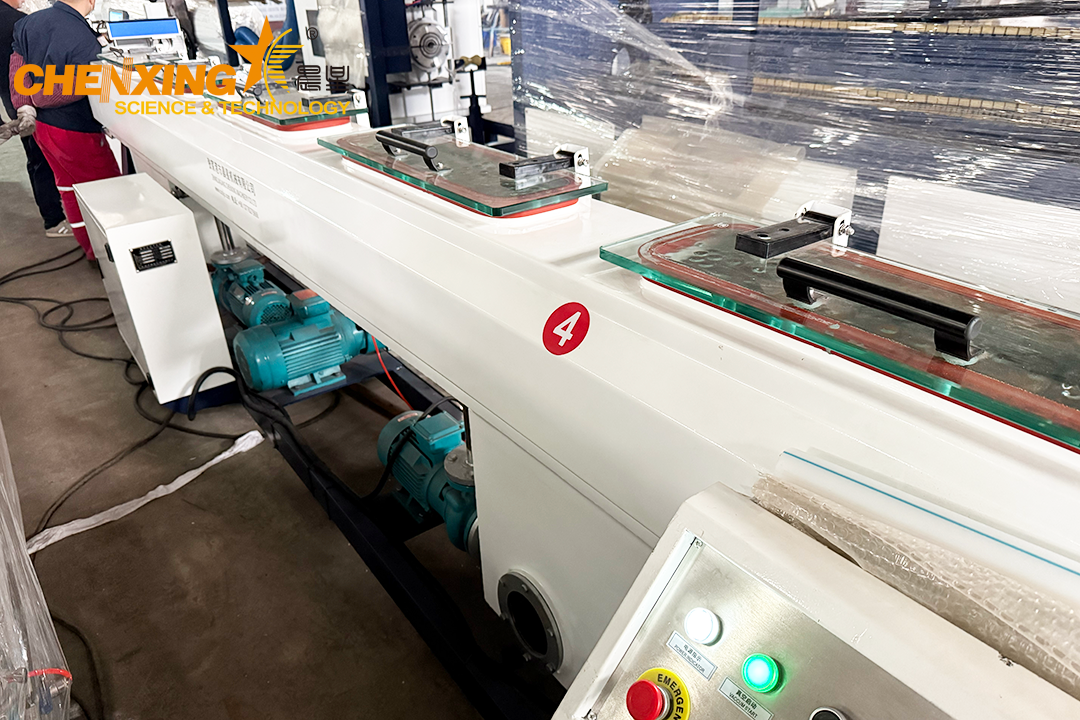
A vacuum calibration tank is a downstream unit used in plastic pipe extrusion lines to shape, stabilize, and cool extruded pipes immediately after they exit the die head.
Its primary role is to:
Maintain precise outer diameter (OD)
Control roundness and wall uniformity
Prevent deformation during cooling
Ensure consistent surface finish
By applying controlled vacuum pressure and water cooling, the tank “locks in” the pipe’s dimensions before it enters further cooling or haul-off stages.
When molten plastic exits the extrusion die, it is still thermally unstable. Without immediate calibration:
Pipes may ovalize
Wall thickness may fluctuate
Surface waviness may occur
A properly designed vacuum calibration tank ensures the pipe is fixed to the correct size while still soft enough to be shaped.
From a production management perspective, unstable calibration leads to:
Higher rejection rates
Increased material waste
Frequent line adjustments
Manufacturers using stable vacuum calibration systems typically see lower scrap ratios and more predictable output quality.
After extrusion, the hot pipe enters a calibration sleeve inside the tank. This sleeve matches the target pipe diameter.
A vacuum pump removes air between the pipe surface and the sleeve, pulling the pipe outward to achieve precise dimensional conformity.
Cooling water circulates around the pipe to gradually reduce temperature without inducing internal stress or surface cracking.
Once calibrated and partially cooled, the pipe exits the tank with a fixed shape, ready for secondary cooling and haul-off.
Precision-machined sleeves determine final pipe size and roundness.
Includes vacuum pumps, valves, and pressure regulators to maintain stable negative pressure.
Ensures uniform cooling and temperature control.
Usually stainless steel to resist corrosion and ensure long service life.
Allows operators to adjust vacuum level, water temperature, and flow rate.
Shorter calibration section
Strong vacuum control
Focus on surface finish
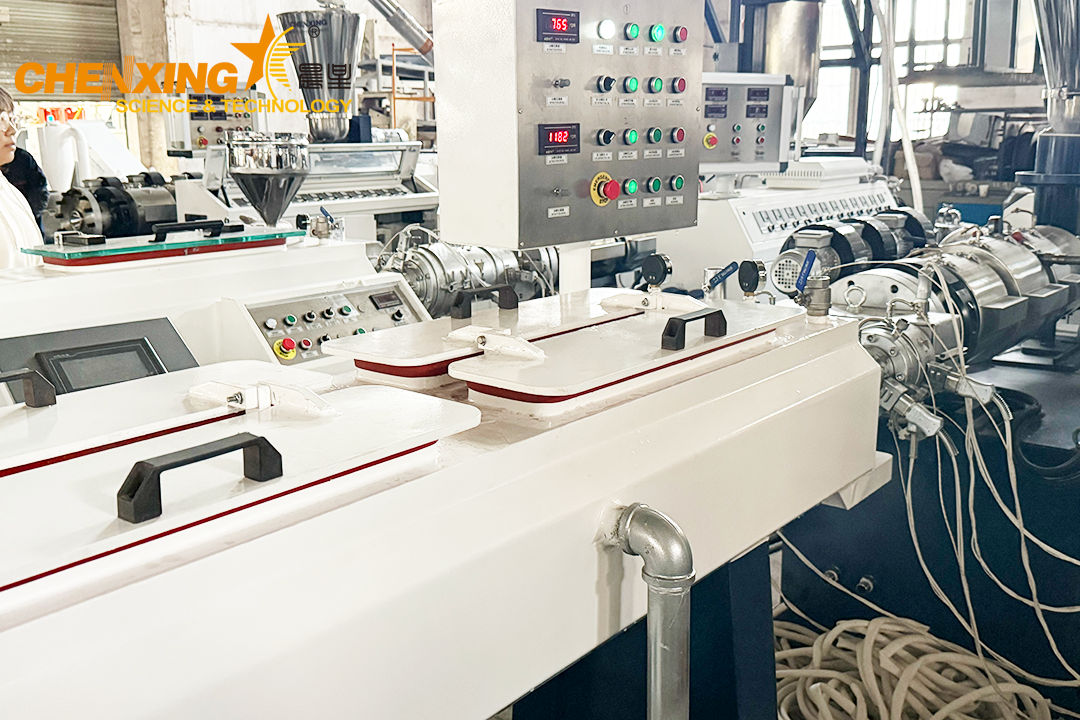
Longer tank length
Multi-stage vacuum zones
Emphasis on gradual cooling
Multiple calibration chambers
Automated vacuum adjustment
Integrated water temperature control
| Quality Factor | Impact of Proper Calibration |
|---|---|
| Outer Diameter | Maintained within tight tolerances |
| Roundness | Prevents oval deformation |
| Surface Finish | Smooth, uniform appearance |
| Internal Stress | Reduced risk of cracking |
| Production Speed | Enables stable high-output runs |
Inconsistent pipe diameter
Surface shrink marks
Excessive ovality
Pipe collapse under haul-off tension
Frequent line stoppages
In most cases, these issues are not extrusion problems, but calibration and cooling mismatches.
PVC, PE, and PP behave differently under vacuum and cooling.
Larger pipes require stronger vacuum stability and longer calibration sections.
High-speed extrusion demands precise vacuum regulation and efficient cooling.
Modern lines benefit from PLC-controlled vacuum and water systems.
A well-designed tank:
Uses optimized vacuum zones
Reduces unnecessary water consumption
Minimizes thermal shock
Extends calibration sleeve lifespan
Over time, this lowers both energy cost and maintenance frequency, which is critical for long-term ROI.
From an engineering standpoint, vacuum calibration tanks are not “one-size-fits-all” equipment. Performance depends on:
Real production data
Matching extrusion output to cooling capacity
Long-term material behavior analysis
Manufacturers with hands-on commissioning experience can fine-tune tank design to suit specific pipe materials and production goals—this practical expertise is what differentiates reliable systems from generic solutions.
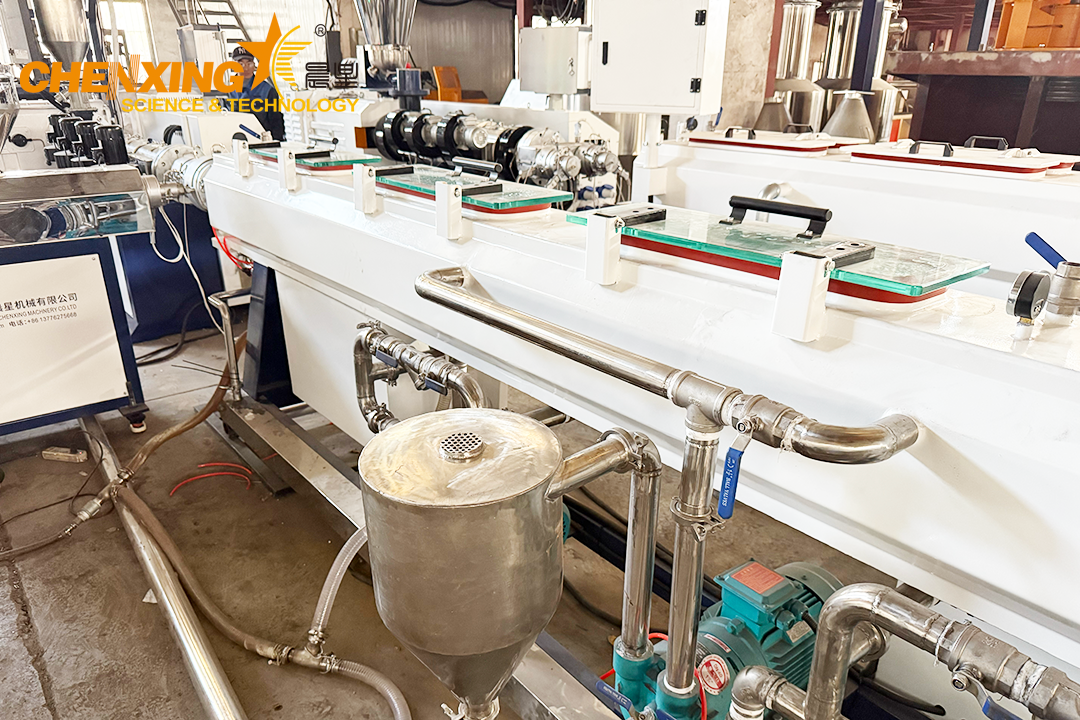
In plastic pipe extrusion, the vacuum calibration tank determines whether extrusion quality is repeatable or unpredictable. It is a critical investment that directly impacts product consistency, operating efficiency, and customer satisfaction.
For pipe manufacturers aiming to reduce scrap, improve dimensional accuracy, and run stable long-term production, choosing the right vacuum calibration system is as important as selecting the extruder itself.
Selection should be based on maximum pipe diameter, material type, and line speed, not just nominal size.
For wide diameter ranges, a multi-chamber vacuum calibration tank with interchangeable calibration sleeves is recommended. This ensures stable vacuum distribution and avoids dimensional fluctuation when switching sizes.
In practice, separate configurations are recommended.
PVC requires stronger initial vacuum and faster surface fixing, while PE needs longer cooling and gradual vacuum zoning. A shared tank often leads to compromises in either surface quality or dimensional stability.
Most pipe extrusion applications operate between –0.06 to –0.08 MPa, but the optimal vacuum level depends on:
Pipe wall thickness
Melt temperature
Cooling water temperature
Excessive vacuum may cause surface marks or pipe collapse, while insufficient vacuum leads to ovality.
Water temperature control is critical.
Uncontrolled cooling can introduce internal stress, especially in thick-wall PE or HDPE pipes. A stable temperature range (typically 15–25°C) ensures uniform cooling and long-term dimensional stability.
For industrial environments, 304 or 316 stainless steel is preferred.
This prevents corrosion, scaling, and contamination, especially in continuous production where water quality varies.
Yes. Most modern vacuum calibration tanks are designed for modular integration.
However, matching haul-off speed, extruder output, and cooling capacity is essential. On-site commissioning or remote parameter tuning is strongly recommended during installation.
Routine maintenance includes:
Cleaning calibration sleeves
Inspecting vacuum seals and valves
Monitoring water filtration systems
A well-maintained tank typically runs for years with minimal downtime and stable performance.
Beyond initial price, TCO is influenced by:
Energy consumption of vacuum pumps
Water usage efficiency
Spare parts availability
Ease of adjustment during size changes
A properly engineered vacuum calibration tank often delivers lower lifetime cost, even if initial investment is higher.
Standard delivery cycles range from 4 to 8 weeks, depending on customization.
Commissioning usually requires 1–3 days, including parameter tuning and operator training.
To receive an accurate quotation, prepare:
Pipe material (PVC / PE / PPR / HDPE)
Diameter and wall thickness range
Extruder output (kg/h)
Target line speed
Cooling water conditions
Looking to upgrade or configure a reliable vacuum calibration tank for your pipe extrusion line?
Our engineering team provides customized vacuum calibration solutions for PVC, PE, PPR, and HDPE pipe production.
Contact us today to discuss your extrusion parameters and line requirements.


