


News&Blogs


As plastic manufacturing becomes more automated, accurate material dosing and production data management are increasingly important for maintaining consistent product quality.
Traditional manual liquid feeding can involve repeated weighing, pouring and operator adjustments. These processes may introduce dosing variations, increase labor requirements and make production records more difficult to standardize.
PLC-based automatic dosing systems provide a more controlled approach by combining liquid measurement, automatic feeding, process monitoring and production data recording in one integrated solution.
For plastic manufacturers looking to improve liquid additive control, Chenxing Machinery provides customized automatic liquid metering and conveying systems.
The system integrates flow meters, Pt100 temperature sensors, pumps, control valves, PLC controls and HMI interfaces to support automated liquid measurement and feeding.
It can be configured for plasticizers, lubricants, stabilizers, processing oils and other compatible liquid additives used in PVC compounding, SPC flooring, WPC manufacturing and plastic recycling.
The system configuration is customized according to liquid properties, required dosing quantities, production capacity and factory layout.
Looking for an automatic liquid dosing solution? Send us your material type, dosing requirements and production process to discuss a suitable system configuration.
Over 60% of US manufacturers are adopting digital controls. Discover how IoT-enabled smart dosing systems with real-time monitoring, AI analytics, and predictive maintenance are transforming Industry 4.0 plastic manufacturing.
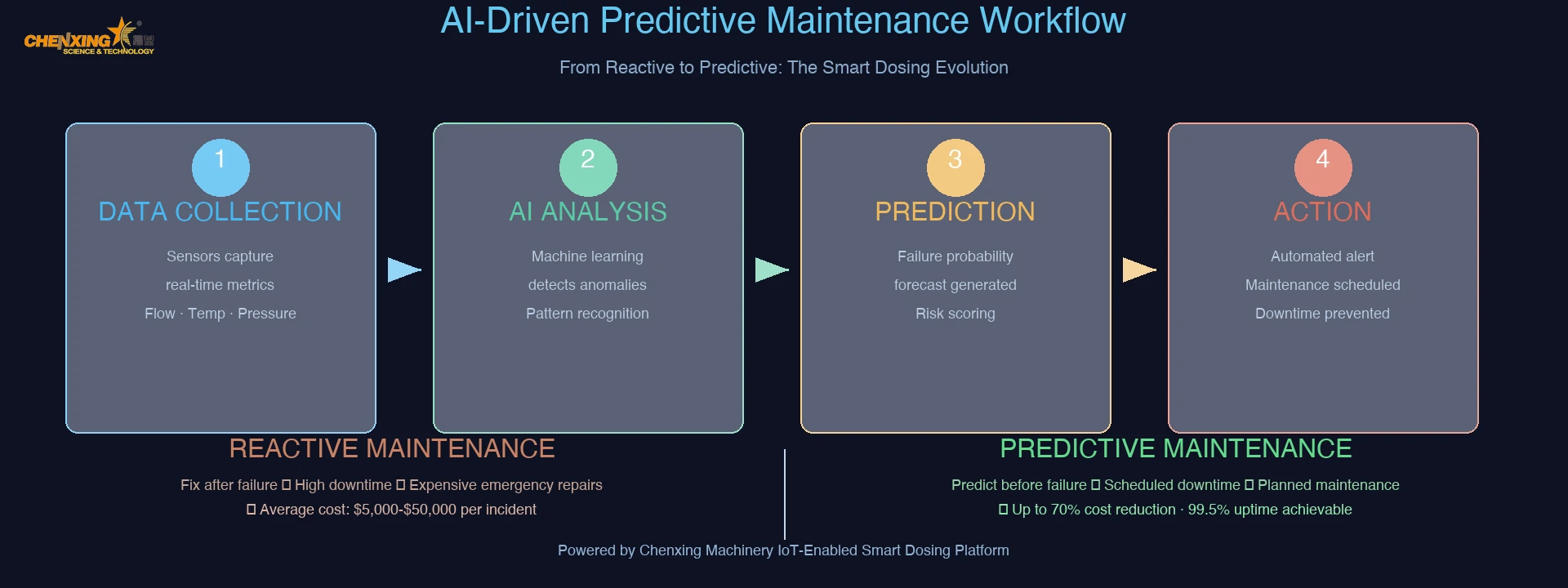
Industry 4.0 is no longer a buzzword — it is the operational reality reshaping global manufacturing floors. At the forefront of this transformation are IoT-enabled smart dosing systems that bring real-time monitoring, standardized data exchange, and AI-driven analytics directly into the production environment. With over 60% of US manufacturers now adopting digital controls for environmental compliance, the convergence of IoT and dosing technology has become a competitive imperative.
Traditional dosing relied on manual calibration, periodic sampling, and reactive maintenance. Today's smart dosing solutions invert this paradigm: they predict, prevent, and optimize — continuously.
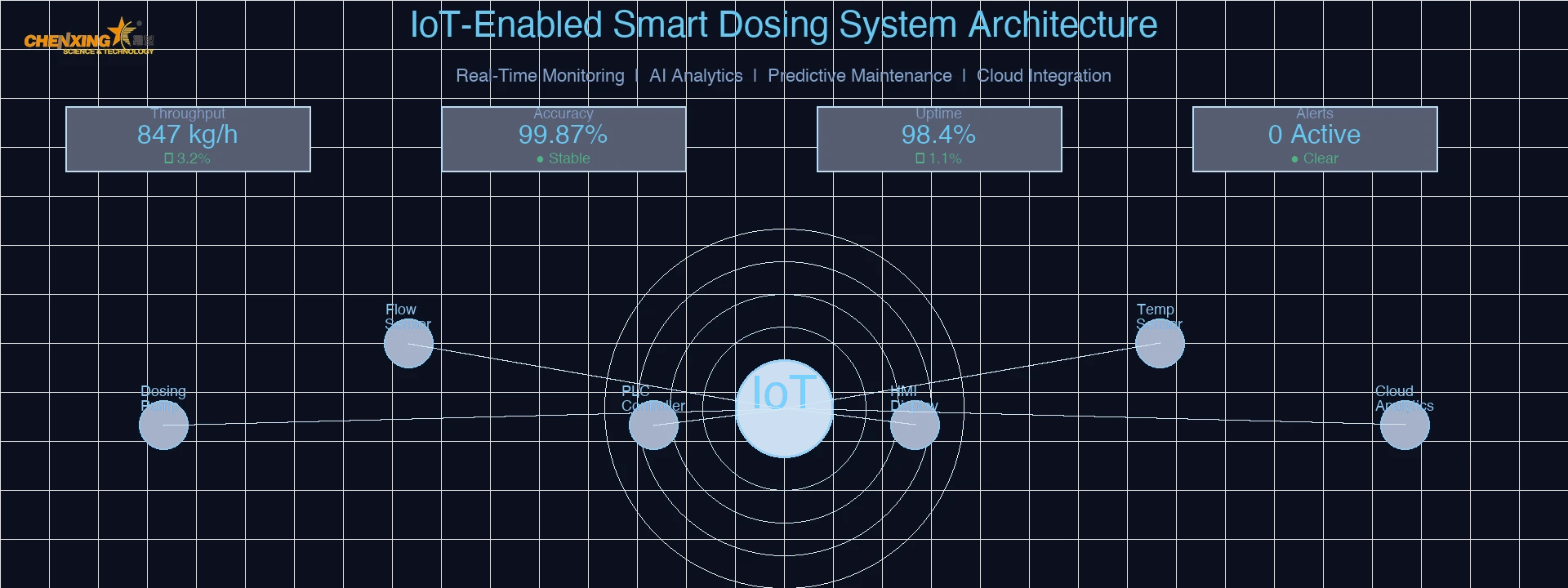
Sensor technology has transformed conventional dosing equipment into intelligent systems capable of tracking flow rate, liquid quantity, temperature, system pressure, and equipment status — all in real time. The Chenxing Liquid Automatic Metering & Conveying System integrates a Pt100 temperature sensor, high-precision flow meters, and intelligent control instruments to provide operators with a complete digital dashboard.
For PVC pipe manufacturers, this means instant detection of plasticizer or stabilizer flow deviations before they affect product quality. For recycling operations, it means precise additive control that reduces operating costs while maintaining consistent output.
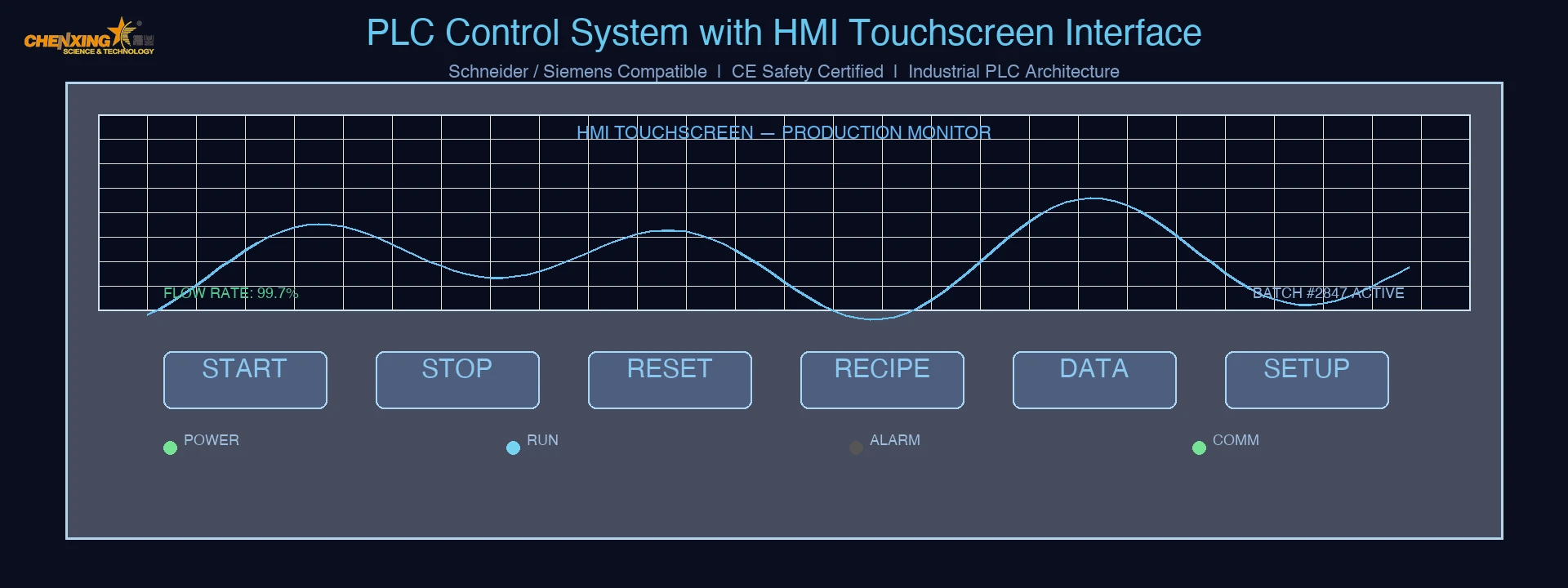
PLC-based control is an important foundation of automated dosing operations. By integrating flow meters, temperature sensors, control valves and pumps, a liquid dosing system can automatically execute predefined dosing instructions and monitor key operating parameters.
An HMI touchscreen allows operators to set dosing quantities, adjust operating parameters and monitor equipment status. Depending on the control configuration, the system can also record batch quantities, production time, formula information and material consumption data.
These functions help reduce manual intervention, improve dosing repeatability and provide useful production records for process management.
For manufacturers planning further digital upgrades, communication interfaces and data integration options can be evaluated according to the existing factory automation architecture.
Industry 4.0 thrives on interoperability. Modern smart dosing systems support standardized data protocols that enable seamless integration with ERP, MES, and SCADA systems. The PLC-based control architecture in Chenxing Machinery's equipment — featuring optional Schneider or Siemens components with CE safety protection — ensures compatibility with global industrial communication standards.
This data connectivity extends beyond the factory floor. Real-time consumption data feeds into supply chain optimization algorithms, enabling just-in-time raw material procurement and reducing working capital tied up in inventory. Global manufacturers leveraging these capabilities report measurable improvements in both operational efficiency and financial performance.
Modern automated dosing systems can collect and display important production data through their control systems. Depending on the selected hardware and communication configuration, operators can monitor parameters such as liquid flow rate, cumulative dosing quantity, temperature, pressure and equipment operating status.
When remote communication functions are included, authorized personnel may be able to access selected operating information through a connected monitoring platform.
For multi-line manufacturing facilities, centralized data collection can help production teams review material consumption, compare operating records and improve process management.
The availability of remote access and centralized monitoring depends on the selected control hardware, communication interfaces and software configuration.
The gap between IoT-enabled manufacturers and those relying on manual processes is widening daily. Chenxing Machinery delivers PLC-integrated dosing solutions with intelligent control, real-time monitoring, and complete data traceability — designed for seamless integration into your plastic extrusion, compounding, and recycling operations.
Request a Smart Dosing Consultation →
A smart dosing system is an automated material metering solution that combines sensors, measuring devices and control systems to manage material feeding according to predefined production requirements. Depending on its configuration, it can provide automatic dosing, process monitoring and production data recording.
A PLC dosing system uses a programmable logic controller to manage dosing operations, pumps, valves and sensors. An IoT-enabled dosing system adds network connectivity and data communication functions, allowing selected operating information to be accessed through connected platforms. The actual capabilities depend on the hardware and software configuration.
Depending on the pump, flow meter, pipeline and sealing materials, an automatic liquid dosing system can be configured for compatible materials such as plasticizers, lubricants, stabilizers, processing oils and liquid additives. Liquid viscosity, temperature, chemical compatibility and required flow rate should be confirmed before equipment selection.
Yes. Automatic dosing equipment can be designed to work with existing mixers, extruders, compounding systems and recycling production lines. The required interfaces, control signals and installation layout should be confirmed during project planning.
Recipe management can be included in the PLC and HMI control configuration. Operators can select predefined dosing quantities and production parameters according to different formulations, helping standardize repetitive production operations.
Remote monitoring requires suitable communication hardware, network connectivity and compatible monitoring software. A standard PLC and HMI configuration does not automatically provide cloud-based IoT monitoring. Remote functions should be confirmed according to the selected system configuration.
The main selection factors include liquid type, viscosity, temperature, required dosing quantity, flow rate, measurement accuracy, number of dosing points, conveying distance and control requirements. These details help determine the suitable pumps, flow meters, valves, pipelines and PLC configuration.


